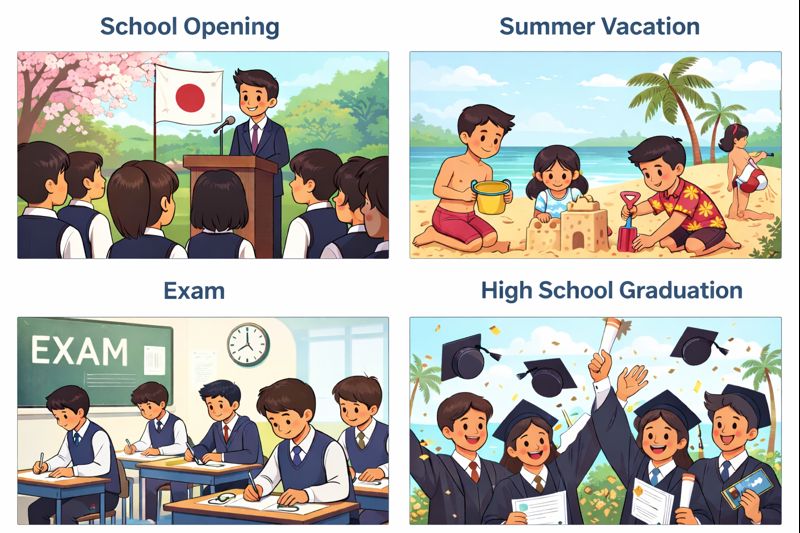
Academic Year Structure of High Schools
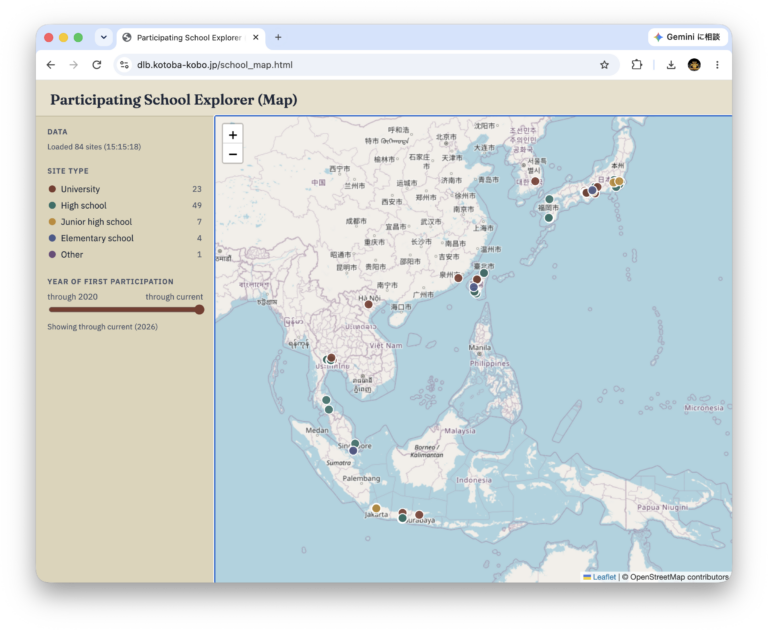
I asked ChatGPT what the academic years are like in the countries participating in the SMILE project. Apparently, it’s something like this. It could be useful for matching.
| Country / Region | Academic Year | Term System | Major Exams / Test Periods | Notes |
|---|---|---|---|---|
| Japan | Early Apr – Mid Mar | Three terms | End of terms: Jul / Dec / Feb | University entrance exams mainly in January and February |
| Taiwan | Early Sep – Late Jun | Two semesters | End of 1st semester: JanEnd of 2nd semester: Jun | University entrance exams mainly in June |
| South Korea | Early Mar – Mid Feb | Two semesters | End of 1st semester: JulEnd of 2nd semester: Dec | CSAT (Suneung) held in November |
| Thailand | Mid May – Late Mar | Two semesters | Midterms: Jul–Aug / DecFinals: Sep / Feb–Mar | National exams mainly around March |
| Indonesia | Mid Jul – Late Jun | Two semesters | End of semesters: Dec / Jun | National assessments for Grade 12 in Mar–Apr |
| Malaysia | Early Jan – Late Nov | Three terms | End of terms: Mar / Jun / Sep | SPM (school-leaving exam) in Nov |
| Vietnam | Early Sep – Late May | Two semesters | End of 1st semester: JanEnd of 2nd semester: May | National graduation exam in Jun–Jul |
| Philippines | Late Aug – Late Jun | Two semesters | End of semesters: Dec / May–Jun | No single national exam; university-specific tests |
![[Contributed Article] Connecting the Classroom to the World](https://www.kotoba-kobo.jp/wp-content/uploads/2026/08/スクリーンショット-2026-08-22-10.02.11-768x491.png)