[Contributed Article] Connecting the Classroom to the World
English Education Research Born from an Encounter with SMILE Project
Kanako Tabuchi, Full-time Foreign Language Instructor, Kansai University
When teaching English, I often find myself wishing there were more opportunities for students to actually use the language they have worked so hard to learn. I have previously taught English at public junior high and high schools. While English classes allow students to study vocabulary and grammar and encounter various scenarios through their textbooks, it is by no means easy to create opportunities within the Japanese school system for them to actually use what they have learned and experience the feeling of successfully conveying a message or achieving mutual understanding. Driven by this realization, I expanded my interests to include ICT-based English education and international exchange initiatives that connect students with learners overseas. Currently, I am exploring—through both practical application and research—how to bridge the gap between learning English and using it to connect with people around the world.
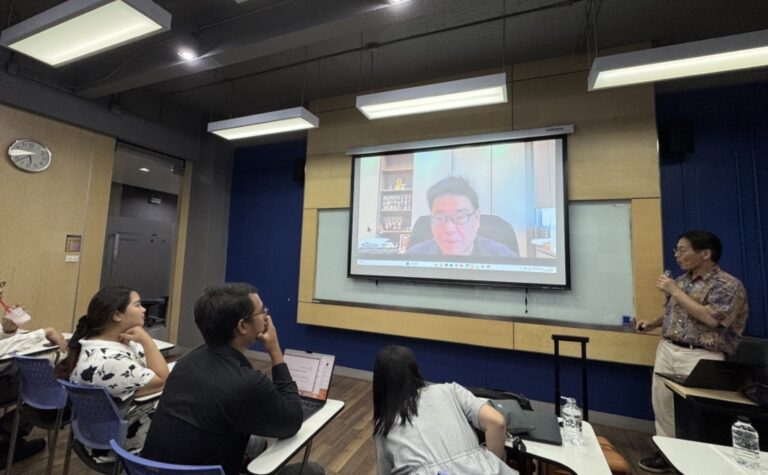
It was about seven years after I began incorporating online exchanges connecting Japanese classrooms with those abroad into my own teaching that I first encountered the “SMILE project.” When Mr. Wakabayashi explained the “SMILE project” initiative to me, I realized that it shared many commonalities with my own philosophy regarding English education. “SMILE project” is a program that connects schools in Japan with schools overseas online, enabling students to interact with one another in English. A key feature of the program is that students communicate directly with their peers abroad, rather than having teachers lead the interactions. I was also drawn to the fact that it does not end with a one-off “international exchange event”; instead, the entire process—from preparation and the exchange itself to the subsequent reflection—is viewed as a cohesive learning experience.
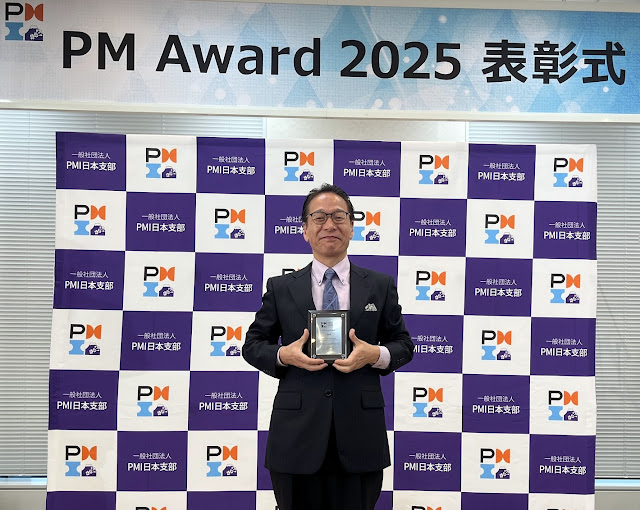
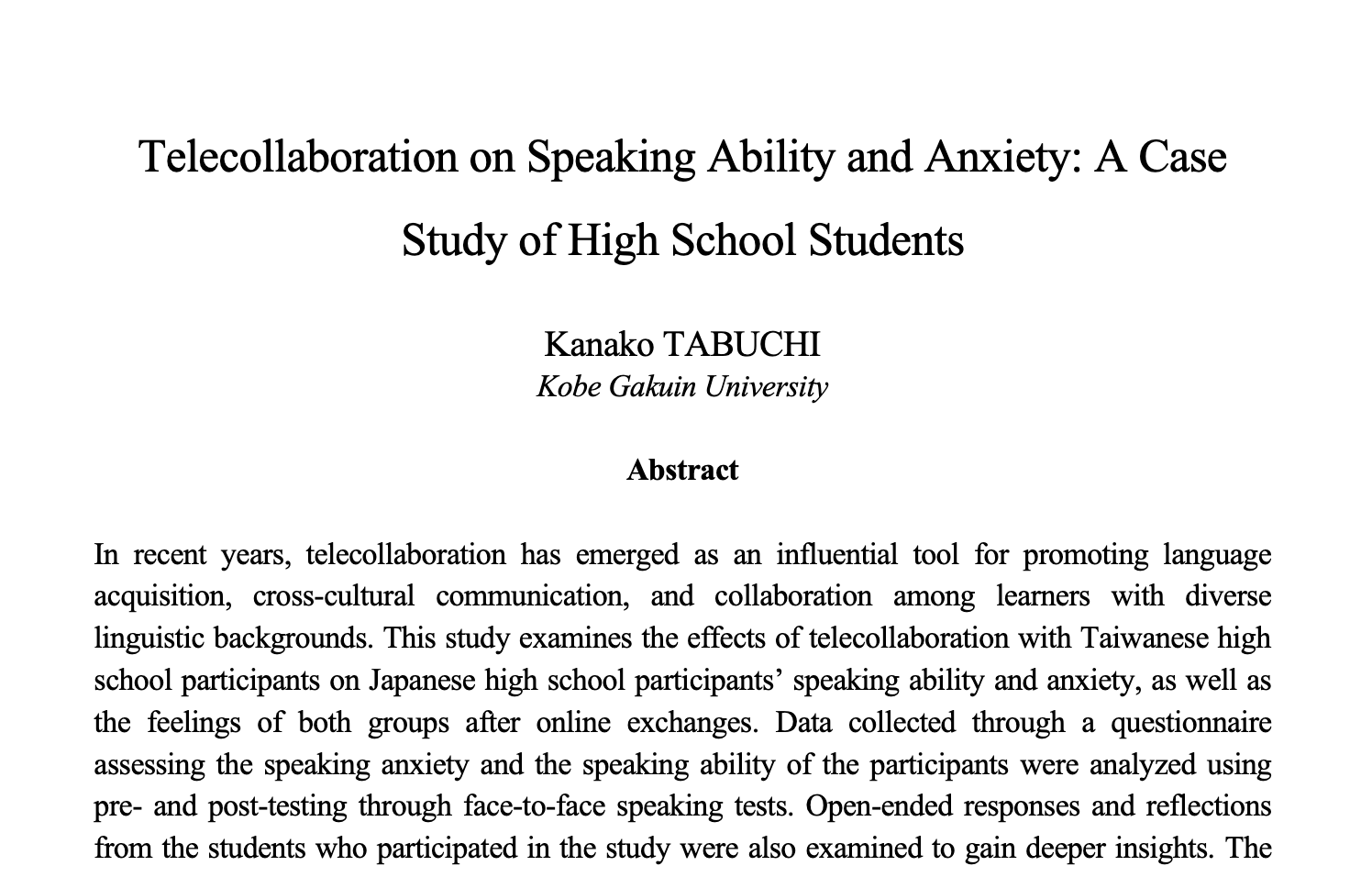
What struck me most was that these online exchanges went far beyond mere “English speaking practice.” Students talked with their overseas peers about topics such as school life, their interests, and their dreams for the future. In doing so, the focus shifted from simply worrying about speaking English “correctly” to the true purpose of communication: a genuine desire to share about themselves and to learn more about the other person. Witnessing how the students’ attitudes toward English evolved reaffirmed for me the vital importance of creating opportunities for them to actually use the language. These experiences led to the paper titled “Telecollaboration on Speaking Ability and Anxiety: A Case Study of High School Students,” which received the Educational Encouragement Award. This study examined how online interactions between Japanese and Taiwanese high school students influenced their English speaking skills and their anxiety regarding speaking English. The research was motivated by a desire for students to go beyond merely studying English and to experience actually connecting with others through the language. To this end, I incorporated opportunities into my lessons to use ICT to connect with high school students abroad and communicate in English. While the results showed no statistically significant change in the level of speaking anxiety itself, an improvement in speaking ability was observed. Furthermore, student reflections revealed that the experience of successfully making themselves understood in English—and interacting directly with peers from another country—helped boost their confidence and shift their mindset regarding speaking the language. The paper was published in the JASELE Journal in 2025 and received the Educational Encouragement Award from the Japan Association for the Study of English Language Education (JASELE) that same year.
Through this research, I was reminded of the profound significance of using English to connect with others, rather than simply studying it. I believe that experiences which spark a genuine desire to convey thoughts to someone or to engage in further conversation can serve as a powerful catalyst for students’ English learning. Simply providing opportunities within the classroom that make students want to use English may transform their attitude toward learning. I intend to continue exploring these possibilities through both my teaching and my research.
(Translated article by Google Translate. The original was written in Japanese.)